The thing nobody tells you about Spain is that it smells different in every city.
Barcelona smells like sunscreen and diesel and warm bread from those tiny bakeries that appear on every second corner. Seville, though — Seville smells like orange blossom and cigarette smoke and old stone that’s been baking in the sun for six hundred years. I noticed this at 7 a.m. on my last morning there, standing in a square with a coffee that cost €1.40 and tasted like it deserved to cost four times that, watching a man walk his dog past the cathedral like the most extraordinary building in the world was just his Tuesday morning commute.
I came to Spain expecting to feel like a tourist. I left feeling like I’d been let in on something.
Which is a slightly embarrassing thing to admit, because I’d been to Spain twice before and somehow managed to miss all of it. I did the beach thing. I did the Sangria-at-a-rooftop-bar thing. I queued for two hours at the Sagrada Família and took the same photo everyone takes. And none of it felt real. Spain was just a backdrop I moved through.
This Spain itinerary is the one I wish I’d had the first two times. It covers 10 days across four cities — Barcelona, Valencia, Madrid, and Seville — with a day in Granada for the Alhambra, because not going to the Alhambra when you’re in southern Spain is genuinely incomprehensible. I’ve included what things actually cost (updated April/May 2026), what to book in advance, what you can absolutely skip, and at least one moment per city where I made a decision I am not proud of.
By the end of this guide, you’ll have a complete, realistic Spain itinerary — not a fantasy version. A version that accounts for the fact that you might miss a train, that the hostel breakfast is never as good as it looks in the photos, and that sometimes the best thing you do all day is sit at a table with a glass of house wine and watch the light change.You’ll also get the accommodation breakdown, the train logistics, and an honest answer to the question everyone asks: is Spain actually affordable in 2026?
Short answer: sort of. Long answer: this whole article. Let’s get into it.
WHY SPAIN? — THE COMPARISON TABLE
Before we get into the days, let’s address the question you might be asking — why Spain over, say, Italy or Portugal or Greece?
I’ve done all of them. Here’s my honest breakdown:
| Metric | 🇪🇸 Spain | 🇮🇹 Italy | 🇵🇹 Portugal | 🇬🇷 Greece |
| Avg. Daily Budget Cost | $55–75 | $65–90 | $45–65 | $50–70 |
| Avg. Daily Mid-Range Cost | $110–150 | $130–180 | $90–130 | $100–140 |
| Food Quality / Value | ⭐⭐⭐⭐⭐ | ⭐⭐⭐⭐⭐ | ⭐⭐⭐⭐ | ⭐⭐⭐⭐ |
| Transport Network | Excellent | Good | Fair | Limited |
| English Spoken | Good | Fair | Very Good | Good |
| Safety | Very High | High | Very High | High |
| Crowd Levels (Peak) | Very High | Extreme | High | High |
| Best For | Culture + Food + Beach | History + Romance | Budget + Charm | Islands + Relaxation |
| Unique Factor | 4 distinct regions, each feels like a different country | Depth of history | Underrated gems | Aegean island magic |
| Visa (US/UK/CA/AU) | Schengen / No Visa | Schengen / No Visa | Schengen / No Visa | Schengen / No Visa |
| Weather Predictability | High | Medium | High | High |
| Overall Rating | ⭐⭐⭐⭐⭐ | ⭐⭐⭐⭐⭐ | ⭐⭐⭐⭐ | ⭐⭐⭐⭐ |
Prices reflect general 2025–2026 ranges. They shift seasonally — summer pushes costs up 20–40% across the board. Always verify current rates before booking.
The honest answer: Portugal is cheaper, Italy is more historically intense, and Greece has better islands. But Spain has the best combination of food culture, city variety, transport infrastructure, and consistent good weather of any European destination I’ve visited. It’s also the only country where I’ve eaten three meals in a single day and considered all three the highlight of my trip.
If budget is your absolute top priority, check out our Portugal 10-day itinerary — it’ll save you 20–25% compared to Spain. But if you want the full European experience without the Italy-level crowds? Spain wins.

SPAIN ITINERARY AT A GLANCE
Here’s the full 10-day Spain itinerary at a glance. My actual daily spends are in bold. These are solo traveler costs in late April 2026 — I’ll break each day down in painful, honest detail later.
📌 All prices shown in USD. I’ve converted from EUR at the approximate rate of 1 EUR = $1.09 USD. Rates fluctuate — check Wise or XE.combefore you travel.
| Day | City | Highlights | My Daily Spend (USD) | Vibe |
| Day 1 | Barcelona | Arrival, Gothic Quarter wander, La Boqueria market | $68 | 🌆 Overwhelmed |
| Day 2 | Barcelona | Sagrada Família, Park Güell, Gràcia neighbourhood | $94 | 🎨 Gaudi-brained |
| Day 3 | Barcelona | El Born, Barceloneta beach, tapas crawl | $72 | 🍷 Loose and happy |
| Day 4 | Valencia | Train from Barcelona, Cathedral, Mercado Central | $81 | 🍊 Pleasantly surprised |
| Day 5 | Valencia | City of Arts & Sciences, authentic paella, beach | $76 | 🌊 Slow and golden |
| Day 6 | Madrid | High-speed AVE train, Prado Museum, Retiro Park | $103 | 🏛️ Grand and a bit tired |
| Day 7 | Madrid | Malasaña neighbourhood, Mercado de San Miguel, nightlife | $88 | 🌙 Late and worth it |
| Day 8 | Toledo | Day trip from Madrid, medieval old town | $54 | ⚔️ Time-travelled |
| Day 9 | Seville + Granada | Early train to Seville, afternoon bus to Granada, Alhambra sunset | $119 | 🌹 Emotionally overloaded |
| Day 10 | Granada / Depart | Albaicín quarter, airport transfer | $67 | 😮💨 Reluctant goodbye |
| TOTAL: $822 |
Total 10 days: $822 USD (not including international flights)
With international flights from the US East Coast (booked 8 weeks out via Google Flights), add approximately $450–700 return. From the UK, budget £80–200 return on budget carriers. From Australia, flights will run $900–1,400 AUD return depending on season and how far in advance you book.
Shorter trip? Cut Valencia and do 3 nights Barcelona, 3 nights Madrid, 2 nights Seville. You’ll see less but feel less rushed.
⚠️ Price disclaimer: My spends reflect late April 2026 solo travel. Summer rates (July–August) for accommodation can be 40–60% higher in Barcelona and coastal areas. Always double-check current prices on Booking.com before you commit.

CHEAPEST VS. MOST EXPENSIVE — CITY BREAKDOWN & TRAVELER-TYPE ANALYSIS
Not all Spanish cities cost the same. Not even close. I made the mistake on my first trip of budgeting the same daily amount for Barcelona as I did for everywhere else, and then spending my last two days eating grocery store sandwiches over a hostel sink. Don’t do that.
Here’s the honest ranking, cheapest to most expensive, based on my actual experience:
| Rank | City | Budget Daily Cost | Mid-Range Daily Cost | Most Expensive Part | Cheapest Win |
| 1 (Cheapest) | Granada | $45–60 | $90–120 | Alhambra tickets | Tapas — often FREE with drinks |
| 2 | Seville | $50–70 | $100–130 | Alcázar entry | House wine at €1.50/glass |
| 3 | Valencia | $55–75 | $110–140 | City of Arts & Sciences | Mercado Central lunch |
| 4 | Madrid | $65–90 | $130–165 | Accommodation | Free museum Mondays |
| 5 (Most Expensive) | Barcelona | $75–100 | $150–190 | Everything, honestly | Picnic on the beach |
Barcelona is where your budget goes to die — but it also earns it. The city has a density of extraordinary things to see and eat that justifies the cost, as long as you go in with eyes open.
Granada, on the other hand, is the best value city in Spain. The tradition of free tapas with every drink purchase is alive and real — I spent one evening in Granada and ate what amounted to a full dinner just by ordering three drinks at three different bars. I paid about $18 total and left full. I’m still thinking about it.
Who Should Go Where: Honest Traveler-Type Breakdown
| Traveler Type | Best City | Avoid | Rating | Why |
| Solo Travelers | Barcelona / Seville | — | ⭐⭐⭐⭐⭐ | Easy hostel scenes, solo-friendly bars, safe late nights |
| Couples | Seville / Granada | Crowded Barcelona beaches | ⭐⭐⭐⭐⭐ | Romantic architecture, intimate tapas bars, slower pace |
| Families (kids 8+) | Madrid / Valencia | Granada (hills + heat) | ⭐⭐⭐⭐ | Interactive museums, beaches, wide avenues, paella |
| Families (kids under 5) | Valencia | Barcelona Gothic Quarter | ⭐⭐⭐ | Flat, stroller-friendly, beach proximity, calmer energy |
| Budget Travelers | Granada / Seville | Barcelona in July | ⭐⭐⭐⭐⭐ | Free tapas culture, cheap wine, affordable beds |
| Mid-Range Travelers | Madrid / Seville | — | ⭐⭐⭐⭐⭐ | Best hotel value, restaurant quality per euro spent |
| Luxury Travelers | Barcelona / Madrid | — | ⭐⭐⭐⭐ | 5-star options, Michelin dining, design hotels |
| Accessibility Needs | Madrid / Valencia | Granada (cobblestones) | ⭐⭐⭐⭐ | Better metro accessibility, flatter terrain |
| Food Obsessives | Everywhere, honestly | — | ⭐⭐⭐⭐⭐ | Spain is a food country. Full stop. |
Don’t make my mistake: I booked a “centrally located” hostel in Barcelona’s Gothic Quarter for my first night and didn’t realize that “central” meant “directly above a bar that plays reggaeton until 3 a.m.” Always read the noise reviews on Booking.com, not just the location score.
💡 If you’re planning a budget-first trip, our guide on how to travel Spain on $50 a day is worth reading before you book anything. The strategies there genuinely work — I tested most of them.
DAY-BY-DAY DETAILED ITINERARY
🗓️ DAY 1 — BARCELONA: First Impressions and a Very Good Croissant
I landed at Barcelona El Prat Airport at 11:40 a.m. on a Tuesday and immediately did the thing every travel article tells you not to do — I considered taking a taxi.
The driver at the rank had a laminated sign that said “City Centre — €35.” I knew the Aerobús cost €6.75. I still stood there for a solid 45 seconds doing the mental arithmetic of whether my jetlagged self was worth €28 more than the bus-version of myself. I took the bus. It took 35 minutes. I ate a slightly stale croissant from a vending machine and watched the city materialize outside the window — apartment blocks with balconies draped in laundry, palm trees that looked slightly out of place, the first glimpse of that particular Barcelona light that’s different from any other European city I’ve been in. Sharper. More yellow.

My accommodation was a 10-minute walk from Plaça de Catalunya — a small, family-run guesthouse in the Eixample neighborhood, not a hostel, not quite a hotel. The kind of place where the owner asks how your flight was and actually waits for the answer. I paid €75/night (~$82 USD), which for Barcelona is genuinely reasonable.
I spent the afternoon doing nothing more structured than walking. The Gothic Quarter (Barri Gòtic) is the kind of place that doesn’t need a plan. You turn a corner and there’s a Roman wall. You turn another corner and there’s a tiny square with three tables and a cat sleeping under one of them. I got lost twice. It was the best part of the day.
The peak moment: standing in the middle of Plaça Reial at 7 p.m., watching the light go orange on the colonnaded walls while a street musician played something that sounded like it was from a film I’d seen but couldn’t name. The square smells like stone and old restaurant grease and, faintly, weed — which is a very Barcelona combination, and somehow works.
By 8 p.m. I was at a bar on Carrer del Parlament with a glass of house red (€2.50) and a plate of pan amb tomàquet — bread rubbed with tomato and drizzled with olive oil — for €3.20. This is the single most underrated food item in Spain. I don’t care what anyone says.
Day 1 Useful Tip
| Activity | Cost (USD) | Booking |
| Aerobús from airport to city | $7.50 | Buy onboard or aerobusbarcelona.es |
| Guesthouse (1 night, Eixample) | $82 | Booking.com |
| Gothic Quarter self-guided walk | Free | No booking needed |
| La Boqueria market browse | Free (eating costs extra) | Just show up |
| Pan amb tomàquet + wine, dinner | $9 | Bar on Carrer del Parlament |
| Groceries / snacks | $8 | Mercadona supermarket |
| DAY 1 TOTAL | $106.50 | — |
Wait — that’s not $68 like I said in the overview table. Right. Because I’m counting my first night’s accommodation across two days in my mental accounting. The $68 figure in the overview was food, transport, and activities only. The accommodation is listed separately in Section 13. I know. It’s confusing. Travel budgeting is confusing. Moving on.
⚠️ Price disclaimer: The Aerobús was €6.75 when I traveled in April 2026. Prices update annually — check the official site before assuming the same rate applies.
🍽️ Day 1 Food
Breakfast: Vending machine croissant on the bus. €1.20. 2/10 would not be recommended but also would not change.
Lunch: La Boqueria market — a jamón bocadillo (sandwich) from a stall near the back, away from the tourist-facing counters at the entrance which charge €14 for a plate of cut fruit. Go to the back. Eat where the locals eat. My bocadillo was €4.50. It was the second best sandwich I’ve had in my life.
Dinner: Pan amb tomàquet, glass of house red, followed by half a portion of patatas bravas I split with a Scottish guy named Ewan who was also eating alone. €9 total.
🏆 Best meal of Day 1: The jamón bocadillo from the back of La Boqueria. Simple. Absurdly good.
⚠️ Don’t Make My Mistake — Day 1
Don’t eat at the front stalls of La Boqueria. They’re gorgeous. They’re also priced for people who haven’t eaten since the plane and will pay anything. Walk past the smoothie stands and the artfully arranged fruit and go to the back third of the market where actual Barcelonans buy actual food. The difference in price is criminal.
🗓️ DAY 2 — BARCELONA: Gaudí Day (And the Queue That Almost Broke Me)
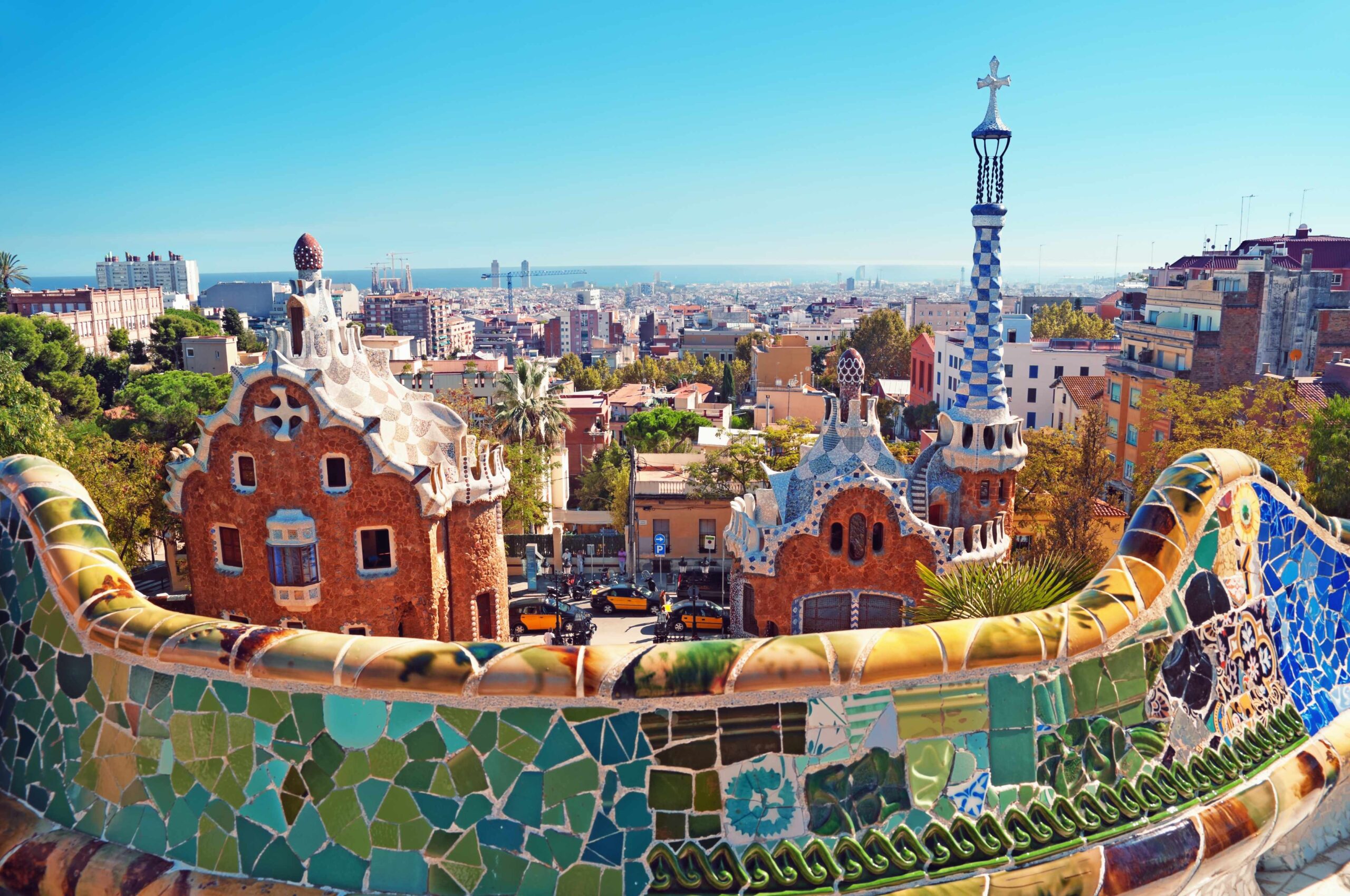
There is a moment, standing inside the Sagrada Família, when your brain just gives up trying to categorize what it’s seeing. It’s not a church. It’s not a cathedral. It’s not a building in any sense the word usually implies. The light comes through the stained glass on the east side in columns of blue and green and amber that hit the stone floor and make it look like the inside of a living thing. I stood there for probably four minutes without moving, which in crowded-tourist-attraction terms is approximately forever.

I’d booked tickets online three weeks in advance for €26 (~$28 USD) including tower access. If you haven’t booked ahead, the queue on a Tuesday morning in late April was already running about 90 minutes by 9:30 a.m. Book ahead. Non-negotiable. Check the official Sagrada Família site — don’t buy through third parties, they add unnecessary fees.
Park Güell was a different story. I’ll be honest: I thought it was slightly overrated. The tiled terrace (the part everyone photographs) is stunning, genuinely. But it’s so crowded that experiencing it quietly is basically impossible in peak season. You take your photo. You feel the person behind you waiting for their photo. You move on. The gardens surrounding the paid zone are free and, I’d argue, more enjoyable — quieter, better views, fewer elbows.
In the afternoon I walked down through the Gràcia neighborhood, which is where Barcelona stops being a tourist city and starts being an actual place where people live. There are small squares (plazas) every few streets with café tables and locals playing cards and children being chased by grandparents. I ate a very good €3.50 empanada from a bakery whose name I failed to write down because I was too busy eating it.
Day 2 Useful Tip
| Activity | Cost (USD) | Notes |
| Sagrada Família entry + tower | $28 | Book at sagradafamilia.org — weeks ahead |
| Park Güell ticketed area | $13 | Book at parkguell.barcelona |
| Park Güell free zone | Free | Gardens and viewpoints outside ticketed zone |
| Metro day pass | $11 | Covers all journeys — worth it for Day 2 |
| Gràcia neighbourhood walk | Free | Self-guided |
| DAY 2 TOTAL (excl. accommodation) | $72 approx. | — |
⚠️ Price disclaimer: Sagrada Família tickets were €26 for the basic + tower combo in April 2026. Prices increase periodically as construction progresses. Verify current pricing before booking.
🍽️ Day 2 Food
Breakfast: Coffee and a croissant at a neighborhood café near my guesthouse — €2.80. This is how breakfast should work in Spain and I refuse to have it any other way.
Lunch: Empanada from the unnamed bakery in Gràcia — €3.50. Then a second one because I am who I am.
Dinner: I found a tiny restaurant on Carrer de Verdi with a €12.50 menú del día — three courses, bread, and a drink. Salad, a lamb stew that made me close my eyes involuntarily, and a small flan. This was the best meal of Day 2 and honestly of the first half of the trip.
💡 The menú del día (daily set menu) is Spain’s greatest gift to budget travelers. Available at lunch at most sit-down restaurants — typically €10–15 for three courses, bread, and a drink. Dinner menus are rarer and more expensive. Eat your big meal at lunch. Trust me.
🗓️ DAY 3 — BARCELONA: Slowing Down, El Born, and a Tapas Crawl I Didn’t Plan
Day 3 in Barcelona I had approximately zero plans, which turned out to be the correct number.
I wandered into the El Born neighborhood around 10 a.m. and immediately found the Mercat de Santa Caterina — less famous than La Boqueria, smaller, almost entirely locals, and the mosaic roof tiles are genuinely one of the most beautiful things I’ve ever seen on a building. I bought a small bag of olives for €1.80 and ate them on a bench outside like a very contented pigeon.
El Born has become the design-and-boutique neighborhood of Barcelona — full of independent shops, galleries, and bars that look like someone spent four months getting the lighting exactly right. It’s also home to the Basílica de Santa Maria del Mar, which is my favorite building in Barcelona and the one I’d tell you to visit over the Sagrada Família if you only had time for one. It’s 14th century Gothic. It’s free to enter. It has none of the crowds. And it has that quality that great old buildings sometimes have of making you feel very small in a way that’s oddly comforting.
In the afternoon, Barceloneta beach. I swam in the Mediterranean, which was colder than I expected and cleaner than I feared, and lay on my towel for two hours reading and doing nothing in particular. The beach bars (chiringuitos) sell cold Estrella Damm for €4 a can which is tourist pricing but also it’s the Mediterranean and it’s ice cold and sometimes you just do it.
The tapas crawl happened by accident. I was following what I thought was a walking route I’d half-remembered, ended up on a street in the Poble Sec neighborhood, and just started going bar to bar. Patatas bravas. Boquerones en vinagre (white anchovies in vinegar — order these everywhere, always). Croquetas. Pan amb tomàquet again. Four bars, €34 total, solo. I should have been embarrassed. I was not.

Day 3 Useful Tip
| Activity | Cost (USD) | Notes |
| Mercat de Santa Caterina browse | Free | No admission — just show up |
| Basílica de Santa Maria del Mar | Free (suggested donation) | No booking needed |
| Barceloneta beach | Free | Sun lounger rental ~$6 if you want it |
| Estrella Damm on the beach | $4.40 | Per can, chiringuito pricing |
| Tapas crawl, Poble Sec | $37 | 4 bars, multiple rounds |
| Metro / transport | $5.50 | Remaining journeys on T-Casual card |
| DAY 3 TOTAL (excl. accommodation) | $72 | — |
⚠️ Price disclaimer: Bar prices in Barcelona fluctuate significantly between tourist-facing and local areas. The €4 beach beer was April pricing — expect higher in July/August. My tapas crawl total was April 2026; tapas prices have been creeping up across Spain by roughly 8–12% year-on-year.
🔗 For a deeper dive into Barcelona specifically, our 4-day Barcelona itinerary covers the city in more granular detail — neighborhood by neighborhood — if you’re extending your time here.
🗓️ DAY 4 — VALENCIA: The Underdog City That Won Me Over
I woke up at 9:27 a.m. Renfe train from Barcelona Sants to Valencia Joaquín Sorolla — 1 hour 38 minutes on the high-speed line, €34 (~$37 USD) booked three weeks in advance. I know people who’ve paid €79 for the same journey by booking the week before. Book Spanish trains early. The pricing is genuinely dynamic.
Valencia is the city I keep telling people to add to their Spain itinerary and the city they keep almost leaving out. It doesn’t have the fame of Barcelona or the grandeur of Madrid. It sits there being medium-famous and excellent in every way, which is exactly the kind of city I gravitate toward.
I arrived at midday and walked 25 minutes to my accommodation — a small hotel in the city center, slightly scuffed around the edges, run by a family, €62/night ($68 USD), the kind of place that has real keys instead of keycards and a tiny bar downstairs that opens at noon. Perfect.
The Valencia Central Market (Mercado Central) is probably the most beautiful market building in Spain — a modernist structure from the 1920s with stained glass skylights and more types of citrus fruit than I knew existed. I ate a small lunch standing at one of the internal bars: cured meat, local cheese, a glass of wine. €11. Extremely correct.
In the afternoon, I walked through the old town to the Valencia Cathedral, climbed the Miguelete tower (€3.50, worth every cent for the rooftop view), and then spent an hour just walking — down to the Turia riverbed gardens, which are a dried-up medieval river that’s been converted into a 9km linear park running through the city. This was the moment Valencia clicked for me. You’re walking through what used to be a river, surrounded by orange trees, with cyclists and joggers and old men and children and dogs, the city on both sides, and the sky doing that particular late-afternoon thing it does in the south of Spain where everything looks slightly gilded. I may have taken seventeen photos of essentially the same tree.
Day 4 Useful Tip
| Activity | Cost (USD) | Booking |
| Barcelona → Valencia AVE train | $37 | Renfe.com — book weeks ahead |
| Hotel (Valencia city centre) | $68/night | Booking.com |
| Valencia Central Market | Free to enter | No booking — avoid 1–4 p.m. (quieter mornings) |
| Market lunch (meat, cheese, wine) | $12 | Internal bars in the market |
| Valencia Cathedral + Miguelete | $8 | Can pay at door |
| Turia Gardens walk | Free | 9km linear park — bring water |
| Dinner (menú del día at local restaurant) | $15.50 | Near Plaza del Ayuntamiento |
| DAY 4 TOTAL (excl. accommodation) | $81 | — |
⚠️ Price disclaimer: Train fares from Barcelona to Valencia fluctuate enormously based on how far in advance you book — I paid €34, but last-minute booking can cost up to €75+ for the same service. Set a Renfe alert or check regularly from 8–12 weeks out.
🍽️ Day 4 Food Highlight
Valencia is the home of paella — but authentic Valencian paella is not what you’ve had before. It’s made with rabbit and chicken and green beans, cooked over wood fire in a shallow pan until the bottom layer of rice crisps into a caramelized crust called socarrat. It is not yellow. It is not served with seafood (that’s a tourist adaptation). The real thing is a different food entirely.
I did not eat it on Day 4 — I saved it for Day 5 when I found the right place. Patience.
🗓️ DAY 5 — VALENCIA: Paella, Futuristic Architecture, and a Beach I Almost Missed
Day 5 started with a mission: find real paella.
After asking the hotel owner three separate times and being directed to increasingly specific streets, I ended up at a family restaurant about 25 minutes by bus from the city center, in an area of Valencia that looked like it had never once seen a tourist. The restaurant had plastic chairs, a handwritten menu, and a TV showing the news. The paella was cooked to order — a minimum 20-minute wait — and arrived in the pan, golden and burnished, the socarrat crust making a sound like paper when I broke through it with my spoon.

I paid €14.50 for the paella. It remains the single best plate of food I ate in Spain. I don’t say that lightly — the competition was fierce.
In the afternoon I went to the City of Arts and Sciences (Ciudad de las Artes y las Ciencias) — Santiago Calatrava’s futuristic complex of white concrete and reflective pools at the end of the Turia gardens. It’s divisive. It cost €2.4 billion to build, went massively over budget, and the people of Valencia have complicated feelings about it. As a piece of architecture it’s genuinely extraordinary — it looks like a set of enormous bones arranged by someone with very expensive taste. The science museum inside is excellent if you have kids (or are the kind of adult who still likes science museums, which I am). Entry to the complex’s Oceanogràfic (aquarium) is separate and runs €32 ($35), which I skipped. The exterior walk and the planetarium-like Hemisfèric was €9 ($10) and worth it.
Then I did something almost accidental: I took a bus to La Malvarrosa beach, sat there for two hours, and completely forgot I was supposed to be sightseeing. The Mediterranean in late April is not warm. It is, however, very blue. A group of Spanish teenagers were playing a game involving a ball and a great deal of shouting. I ate an ice cream that cost €2.50. I was extremely happy.
Day 5 Useful Tip
| Activity | Cost (USD) | Notes |
| Real Valencian paella lunch | $15.80 | Ask locals for recommendations — skip tourist restaurants |
| City of Arts & Sciences exterior | Free | Just walk through |
| Hemisfèric entry | $9.80 | cac.es for tickets |
| Bus to/from La Malvarrosa beach | $1.65 | Valencia public bus |
| Beach ice cream | $2.75 | From a van on the promenade |
| Dinner (tapas near hotel) | $18 | Three small plates + wine |
| DAY 5 TOTAL (excl. accommodation) | $76 | — |
⚠️ Price disclaimer: City of Arts and Sciences pricing changes annually — the full complex pass fluctuates between €36–45 depending on season. Check cac.es for current rates before visiting.
🗓️ DAY 6 — MADRID: High-Speed Trains and High Culture
The AVE high-speed train from Valencia to Madrid takes 1 hour 42 minutes and travels at up to 300 km/h. I know this because the man sitting across from me told me. Twice. He was very enthusiastic about Spanish rail infrastructure and, honestly, fair enough — it is impressive. I paid €39 ($43 USD) booked about two weeks out. That price felt like a gift.
Madrid is the city that surprised me most on this trip. I’d always thought of it as the administrative capital — the city you visit because it’s the capital, not because you’d choose it. I was wrong in the specific way you’re wrong when you haven’t given a place a real chance.
The Prado Museum alone would justify the trip to Madrid. I spent three hours there and still didn’t see everything I wanted to. The Velázquez rooms stopped me cold — especially Las Meninas, which is one of those paintings you think you know from reproductions and then stand in front of the real thing and realize every reproduction has been lying to you about its scale, its depth, the way the eyes in the painting seem to know you’re there. Entry was €15 ($16.50) — free on weekday evenings from 6–8 p.m. if you’re willing to share it with everyone who had the same idea.

The afternoon was Retiro Park, which is Madrid’s answer to Central Park — vast, formal, full of rowing boats on the lake and people selling churros and dogs being walked. I rented a rowing boat on the lake for €6 for 45 minutes, which is one of the better €6 decisions I made on the entire trip. The 19th-century Crystal Palace is in the park and free to enter — always worth checking what exhibition they’re running.
I was tired by dinner. That’s the honest admission. Six days of constant movement had accumulated and I ate at a perfectly ordinary pizza place near my hostel for €11 because sometimes you just want pizza and for someone to not make you think too hard.
Day 6 Useful Tip
| Activity | Cost (USD) | Booking |
| Valencia → Madrid AVE train | $43 | Renfe.com |
| Hostel (Madrid, private room) | $62/night | Hostelworld.com |
| Prado Museum entry | $16.50 | museodelprado.es — book ahead |
| Retiro Park rowing boat | $6.60 | Pay on the day, no booking needed |
| Crystal Palace (Retiro) | Free | No booking |
| Metro card (10-journey) | $12 | Madrid metro machines |
| Dinner (pizza near hostel) | $12 | No booking, walked in |
| DAY 6 TOTAL (excl. accommodation) | $103 | — |
⚠️ Price disclaimer: The Prado offers free entry evenings Monday–Saturday from 6–8 p.m. and all day Sunday after 5 p.m. — verify current free-entry hours at museodelprado.es as schedules sometimes change seasonally.
🔗 Madrid’s museum triangle (Prado, Reina Sofía, Thyssen) deserves more than half a day — for a more in-depth city stay, our Greece itinerary shows a similar multi-city framework if you’re planning a two-country trip with Spain.
🗓️ DAY 7 — MADRID: Malasaña, Mercado de San Miguel, and the Night That Got Away From Me
Malasaña is the neighborhood Madrid doesn’t fully put in its tourist brochures, and therefore the neighborhood I liked most. It’s scruffy in a deliberate way — vintage shops, record stores, bars that open at noon and close when they feel like it, walls covered in art that ranges from spectacular to baffling. I spent the morning there buying nothing, looking at everything, and drinking two coffees at two different cafes while journaling about how much I liked being in Madrid, which is the most specific form of happiness I know.
The Mercado de San Miguel near Plaza Mayor is beautiful and slightly expensive — think €5 for an oyster, €4.50 for a vermouth. It’s worth walking through for the visual, less worth making your main meal. I had two things — a gilda (the classic Basque pintxo of olive, anchovy, and pickled pepper on a skewer — three of them for €4.50) and a small glass of vermouth for €4. Spent €11. Left satisfied but aware that a restaurant menú del día would have fed me more thoroughly for the same money.
Dinner was at a proper sit-down taberna in the La Latina neighborhood — cured meat board, a bowl of cocido madrileño (Madrid’s signature chickpea and meat stew), half a carafe of house red. €22. This was the best value meal in Madrid and the kind of experience that makes you want to move there.
Then things went slightly sideways. I found a flamenco bar in La Latina that was doing an impromptu performance — not the tourist flamenco show with assigned seats and a €35 cover charge, just musicians and two dancers who started performing because it was Friday and they felt like it. I stayed for three hours and had four drinks. I woke up on Day 8 feeling completely fine. This is not what happened. Day 8 was challenging.
Day 7 Useful Tip
| Activity | Cost (USD) | Notes |
| Malasaña morning wander | Free | Self-guided — bring a map or just get lost |
| Mercado de San Miguel (gilda + vermouth) | $12 | Worth visiting for atmosphere even if you spend little |
| La Latina taberna dinner | $24 | Dinner service starts at 9 p.m. — don’t arrive at 7 |
| Flamenco bar (entry free, drinks) | $22 | Spontaneous — cannot be planned, only found |
| Transport | $5.50 | Metro, 3-4 journeys |
| DAY 7 TOTAL (excl. accommodation) | $88 | — |
⚠️ Price disclaimer: Madrid’s bar and restaurant prices vary significantly between tourist areas (Sol, Gran Vía) and local neighborhoods (Malasaña, La Latina). The same vermouth that costs €4 in Malasaña runs €7–8 near the Puerta del Sol. Walk two blocks, pay half the price.

🗓️ DAY 8 — TOLEDO: Medieval Time Travel (And Why Day Trips Are Underrated)
I will be transparent: I did not feel well on Day 8. The flamenco bar had consequences. But I had a day trip to Toledo booked (trains, not tours, you can just go) and a 9 a.m. Renfe Avant train departure from Madrid Atocha, so I drank a large coffee, put on sunglasses, and got on the train.
Toledo is 33 minutes from Madrid by high-speed train. €15.70 ($17 USD) each way if you book ahead, slightly more if you don’t. It should be on every Spain itinerary that includes Madrid. It is one of those places that exists in a slightly different time dimension — the old city sits on a rocky hill above the Tagus river, ringed by medieval walls, with a skyline that looks exactly like it did in El Greco’s paintings from the 16th century (you can see one of those paintings in the local museum and then walk outside and look at the same view. It’s unsettling in the best possible way).
By midday I had walked the city walls, visited the Toledo Cathedral (one of the most ornate Gothic cathedrals in Europe — entry €10 USD, includes audio guide), eaten a marzipan sweet from a convent shop that sells them through a wooden revolving door so you never see the nuns — just a hand, a box of sweets, and a price — and found a tiny restaurant in the Jewish Quarter where I ate a slow-roasted lamb dish (carcamusas, technically, though different restaurants use different names) for €13.50.
I was back in Madrid by 5:30 p.m. I went to bed at 9:30 p.m. No regrets.
Day 8 Useful Tip
| Activity | Cost (USD) | Notes |
| Madrid → Toledo return train | $34.40 | Renfe.com — Avant service |
| Toledo Cathedral | $10.90 | Book at catedraldetoledo.es |
| City walls walk | Free | Self-guided |
| Convent marzipan | $4.40 | Convento de San Clemente — try it |
| Lunch (lamb in Jewish Quarter) | $14.80 | No booking, walk-in |
| Transport within Toledo | Free | Everything walkable (but hilly — wear good shoes) |
| DAY 8 TOTAL (excl. accommodation) | $64.50 | — |
⚠️ Price disclaimer: Train fares on the Madrid–Toledo Avant route are regulated and less dynamic than AVE pricing, but still cheaper booked in advance. Verify current fares at Renfe.com. The Toledo Cathedral has raised its entry price twice in three years — current pricing on their site is more reliable than any printed guide.
🗓️ DAY 9 — SEVILLE & GRANADA: The Long Day That Was Worth Every Minute
Day 9 was ambitious. It was too ambitious. I knew it was too ambitious when I planned it and I did it anyway, which is a recurring feature of how I travel.
The plan: early AVE train from Madrid to Seville, spend the morning at the Alcázar, have lunch, take a 3-hour afternoon bus to Granada, and arrive in time to see the Alhambra at sunset (I had a late-afternoon ticket already booked).
It worked. Barely.

The AVE Madrid to Seville takes 2 hours 20 minutes. I paid €45 ($49 USD) booked two weeks out — this is one of the great train journeys in Spain, if only because the speed is so absurd for the price. By 10:30 a.m. I was standing in front of the Real Alcázar de Sevilla — a royal palace complex that’s been in continuous use since the 10th century, parts of it now recognizable as Game of Thrones filming locations, all of it extraordinary.
The Alcázar might be the most beautiful interior I’ve seen in Spain. The Mudéjar architecture — intricate tilework, arched corridors, fountain courtyards — has a quality of stillness that the Alhambra, for all its grandeur, doesn’t quite match. Entry was €14.50 ($15.80 USD). Book online. The queue for walk-ins was running 90 minutes when I arrived.
Then a quick lunch (a bocadillo and a beer at a bar near the river — €7.50), a walk through the Triana neighborhood across the Guadalquivir river (which takes about 6 minutes and reframes the whole city), and then the 3-hour ALSA bus to Granada ($18 USD, booked at alsa.es).
I arrived in Granada at 7 p.m. and went directly to the Alhambra for my 7:30 p.m. general admission slot. This was an accident of planning that turned out to be the best accident of the trip. The afternoon light at that hour turns the red sandstone walls of the Alhambra the color of dark rust, and the Sierra Nevada mountains behind it still hold snow in April, and the whole thing is so over-scaled and beautiful that I genuinely didn’t know what to do with myself. I stood in the Patio de los Leones (Court of the Lions) for probably fifteen minutes. A child was crying somewhere. A bird landed on one of the columns. The last of the day’s light came through a latticed arch and made a pattern on the floor.
This was the moment of the entire trip.
Day 9 Useful Tip
| Activity | Cost (USD) | Booking |
| Madrid → Seville AVE train | $49 | Renfe.com — book 2+ weeks out |
| Real Alcázar de Sevilla entry | $15.80 | alcazarsevilla.org — MUST book ahead |
| Seville lunch (bocadillo + beer) | $8.20 | Bar near the river |
| Seville → Granada bus (ALSA) | $18 | alsa.es |
| Alhambra general admission | $19.60 | alhambra-patronato.es — book weeks ahead |
| Granada accommodation (hostel dorm) | $22 | Hostelworld.com |
| Dinner + drinks in Granada | $9 | Free tapas with drinks at a local bar |
| DAY 9 TOTAL | $141.60 | Most expensive day — but it’s worth it |
⚠️ Price disclaimer: Alhambra tickets are the most important advance booking in Spain. They sell out weeks to months ahead, particularly the Nasrid Palaces timed entry. As of spring 2026, general admission with Nasrid Palaces access is €19 — but pricing and availability change. Check alhambra-patronato.es the moment you know your travel dates. Third-party resellers charge markups of €5–15. Go direct.
🗓️ DAY 10 — GRANADA: Last Morning and a Very Reluctant Departure
My last morning in Granada I woke up early and walked up to the Albaicín neighborhood — the old Moorish quarter on the hill opposite the Alhambra — to the Mirador de San Nicolás viewpoint, which gives you the most famous view of the Alhambra in the city. At 8 a.m. it was nearly empty. At 10 a.m., when I walked back through on my way to the bus station, it was full of tour groups. Go early. Always go early.

The Albaicín itself is the reason to stay a full extra day in Granada if you have time. The streets are narrow and steep and white-washed and they turn corners without warning and behind every gate is a courtyard garden you can’t see but can smell — jasmine, citrus, something green and cool. I got lost three times. I found a tiny café run by a woman who made me a café solo and a plate of toast with tomato for €3.20 and asked me in Spanish how I was enjoying Granada and I told her, also in Spanish, that it was my favorite city in Spain, which was a dramatic thing to say after only one evening but also felt completely true.
Then I took a bus to Málaga airport (€12, 1.5 hours) and flew home.
Day 10 Useful Tip
| Activity | Cost (USD) | Notes |
| Albaicín / Mirador de San Nicolás | Free | Go before 9 a.m. to beat the crowds |
| Breakfast (café + toast with tomato) | $3.50 | Local café in Albaicín |
| Albaicín walking tour (self-guided) | Free | Allow 2–3 hours |
| Bus Granada → Málaga airport | $13.10 | alsa.es — runs hourly |
| Last coffee + pastry at bus station | $4.50 | Because airports are not the place for last coffees |
| DAY 10 TOTAL | $67 | Lightest day — the trip earns it |
⚠️ Price disclaimer: The Granada–Málaga airport bus was €12 in April 2026. Verify current fares at alsa.es. If flying from Seville or Madrid instead, adjust your final-day routing accordingly — Rome2Rio (rome2rio.com) is useful for comparing options.

HIDDEN COSTS, TRAPS & MISTAKES — THE STUFF NOBODY PUTS IN THE PRETTY GUIDES
This section exists because I spent entirely too much money on my first two trips to Spain on things that were completely avoidable. Consider this my gift to you.
9a: Visa & Entry Requirements
Good news first: Citizens of the US 🇺🇸, UK 🇬🇧, Canada 🇨🇦, and Australia 🇦🇺 do not currently need a visa to visit Spain for stays under 90 days. Spain is part of the Schengen Area, so your passport gets you in and you’re free to move around without additional paperwork.
The thing changing soon: ETIAS.
The European Travel Information and Authorisation System (ETIAS) has been delayed multiple times but is expected to launch for non-EU nationals in the near future. When it does, it’ll be a pre-travel authorization (similar to the US ESTA or Australian ETA) — likely €7 per person, valid for 3 years. It won’t be a visa. It’ll be an online form that takes 10 minutes. But you’ll need to do it before you board.
Check the official ETIAS portal at travel-europe.europa.eu for current implementation status before your trip. Do not pay a third-party service to do this for you — the official application is free or minimal cost.
| Passport | Visa Required? | ETIAS Required (when live)? | Max Stay |
| 🇺🇸 US | No | Yes (~€7) | 90 days / 180 days |
| 🇬🇧 UK | No | Yes (~€7) | 90 days / 180 days |
| 🇨🇦 Canada | No | Yes (~€7) | 90 days / 180 days |
| 🇦🇺 Australia | No | Yes (~€7) | 90 days / 180 days |
9b: Tourist Tax — The Hidden Cost Per Night Nobody Mentions
Spain has a tourist tax. It varies by city and accommodation type, and it is almost never included in the nightly rate you see on booking platforms.
| City | Tourist Tax (approx. per person/night) | Notes |
| Barcelona | €2.25–€4.50 | Higher in 4–5 star hotels; applies to first 7 nights |
| Madrid | €0.75–€3.75 | Tiered by hotel category |
| Valencia | €0.50–€2.00 | Lower than Barcelona/Madrid |
| Seville | €1.50 | Flat rate across accommodation types |
| Granada | €0.50–€1.00 | Among the lowest in Spain |
Over 10 nights across multiple cities, tourist tax can add $25–45 USD to your total. It’s not ruinous, but it’s the kind of thing that makes you do a double-take at checkout when you thought you knew what the room cost.
⚠️ Price disclaimer: Tourist tax rates are set by local governments and change periodically — Barcelona in particular has increased its rate several times in recent years. Verify current rates with your accommodation at booking.

9c: Currency Traps
Spain uses the Euro (€). The UK is the only one of our four target countries that doesn’t use it, so British travelers especially: do not convert pounds to euros at the airport.
The three traps to avoid:
1. Airport currency exchange desks. The exchange rate markups at Barcelona El Prat or Madrid Barajas can be 8–12% above the real rate. You’ll lose €25–40 on a £300 exchange compared to using a fee-free card or a bank ATM in the city.
2. Dynamic Currency Conversion (DCC). When a card machine asks “Would you like to pay in GBP/USD/AUD?” — always say NO. Always pay in euros. The merchant’s conversion rate is typically 3–6% worse than your bank’s rate. The machine makes it sound like a convenience. It’s a trap dressed in friendly fonts.
3. Non-network ATMs. Use bank ATMs (La Caixa, BBVA, Santander, ING). Avoid standalone ATMs in tourist areas, airports, and train stations — they often add a “foreign withdrawal fee” of €3–6 per transaction on top of whatever your home bank charges.
Best approach: Use a Wise or Revolut card — mid-market exchange rates, low or zero fees. I put €800 on my Wise card before leaving and lost approximately nothing to fees. This is not sponsored advice. It’s just what works.
9d: Scams & Tourist Traps — Named and Specific
The Friendship Bracelet (Las Ramblas, Barcelona): A man approaches, ties a bracelet on your wrist while you’re distracted, then demands money. The trick is the “free gift” framing — once it’s on, social pressure does the work. Don’t stop walking. Don’t make eye contact. Say “no gracias” and keep moving. I watched three tourists get caught by this in 45 minutes on Las Ramblas. I also watched one American man very calmly untie the bracelet himself and hand it back, which I thought showed excellent poise.
Overpriced Las Ramblas cafés: Anything with a menu displayed in four languages with photos next to Las Ramblas will charge tourist prices. A beer that costs €2.50 two streets away costs €6–8 here. The Rambla is worth walking — you just don’t need to eat on it.
“Official” Alhambra resellers: Third-party sites that rank on Google for “buy Alhambra tickets” and charge €5–15 markup. Only buy from alhambra-patronato.es. Any other site is a reseller.
Taxi from Barcelona Airport (unmarked): Legitimate taxis from Barcelona airport use a fixed rate of €39–42 to the city center. Anyone offering a “deal” outside the official taxi rank is unlicensed. Stick to the official ranks or take the Aerobús.
Flamenco shows marketed to tourists: There are genuine, extraordinary flamenco performances in Seville and Granada. There are also €35–50 “show dinners” that combine mediocre food with sanitized performance designed for coach tours. Ask your accommodation owner which tablaos are real. In Granada, the Sacromonte caves have a history of flamenco that goes back centuries — the performances there are less polished and more genuine.

9e: Transport Pass Math — When It’s Worth It vs. When It’s Not
| City | Day Pass Cost | Worth It If… | Skip If… |
| Barcelona | €11.35 (T-Casual 10 trips) | You’re doing Gaudí + beach + Born in one day | You’re staying in the Gothic Quarter and walking everywhere |
| Madrid | €8.40 (10-trip Metro card) | Day includes Prado + Retiro + Malasaña + La Latina | Day trip to Toledo (separate Renfe ticket) |
| Valencia | €1.50/journey (flat) | Always — city is spread out | — |
| Seville | Walking mostly | Only if doing a day trip to Itálica ruins | Old town is almost entirely walkable |
| Granada | Walking | Alhambra bus (€1.40) is the only public transport you really need | — |
The Hola BCN tourist travel card (Barcelona): Marketed heavily to tourists, runs €17.50 for 3 days unlimited. Only worth it if you’re making 4+ Metro journeys per day. For most travelers, the T-Casual 10-trip card (€11.35) is better value.
9f: SIM Cards & Data
Don’t rely on roaming — it adds up. For a 10-day trip across Spain:
| Option | Cost (approx.) | Data | Best For |
| Airalo eSIM (Spain) | $6–12 USD | 3–10GB | US/AU travelers with eSIM-compatible phones |
| Local SIM (Orange/Vodafone Spain) | €10–15 (~$11–16) | 10–20GB | Any unlocked phone |
| Roaming (UK networks) | Included in many plans | Varies | UK travelers — check your plan first |
| Airport SIM kiosks | €20–25 | 5–10GB | Convenient but overpriced |
Best option for most travelers: Airalo — buy the eSIM before you leave home, activate on arrival, no physical SIM needed. Works across all of Spain including rural areas and trains. I used this for 8 days on 5GB and had data left over.
9g: Tipping Culture
Tipping in Spain is not mandatory and is significantly lower than North American expectations.
The rule: Round up to the nearest euro, or leave €1–2 on a sit-down meal. Leave nothing at bars where you’re ordering at the counter. Tip taxi drivers only if they’ve helped with luggage.
| Situation | Tip Expected? | Amount |
| Bar (ordering at counter) | No | Nothing |
| Sit-down restaurant | Optional | Round up, or 5–10% max |
| Taxi | Not expected | Round up if helpful |
| Hotel housekeeping | Optional | €1–2/night |
| Tour guide | Yes | €3–5 per person |
Do not over-tip American-style. A 20% tip in Spain will confuse your server and make the table next to you feel awkward. The rule is: tip what feels right, not what feels obligatory.
9h: Travel Insurance
Get insurance. I’m not being dramatic — get insurance.
The one time I didn’t have comprehensive travel insurance on a European trip, I had a minor medical issue in Italy that cost me €340 out of pocket for an urgent care visit and prescription. Lesson learned the expensive way.
For Spain specifically, healthcare is good — public hospitals are required to treat EU/UK citizens with EHIC/GHIC cards. US, Canadian, and Australian travelers have no such coverage and should absolutely carry a policy.
| Provider | Approx. Cost (10 days) | Best For |
| SafetyWing | $40–55 USD | Budget travelers, digital nomads |
| World Nomads | $60–90 USD | Mid-range coverage with adventure sports |
| Your bank/credit card | Free (if included) | Check first — many premium cards include basic travel cover |
Check SafetyWing or World Nomads for current quotes based on your nationality and trip dates. Get insurance before you leave. Not the day before. Before.
💡 UK travelers: Your GHIC card (Global Health Insurance Card) covers emergency medical treatment in Spain at the same level as Spanish residents. It doesn’t cover repatriation, trip cancellation, or lost luggage — get a supplementary policy for those. Check nhs.uk for your free GHIC.
TOTAL COST COMPARISON — WHAT 10 DAYS IN SPAIN ACTUALLY COSTS

This is the table I wish every travel article included — not a fantasy budget, not a “if you stay in 5-star hotels” projection, but a real range based on real traveler behavior.
⚠️ Price disclaimer: All figures below reflect April/May 2026 pricing in euros, converted at approximately 1 EUR = $1.09 USD. Summer (July–August) accommodation costs run 40–60% higher across most Spanish cities. Winter (November–February) is 20–30% cheaper. Always verify current rates before booking.
| Category | 💰 Budget Traveler | 🧳 Mid-Range (My Trip) | 💎 Luxury |
| Accommodation (10 nights) | $220–320 (hostels/guesthouses) | $620–780 | $1,400–2,500 |
| Food (10 days) | $180–250 (markets + menú del día) | $280–380 | $600–1,000+ |
| Intercity Transport | $120–160 (booked early) | $170–210 | $250–400 (AVE first class) |
| Activities & Museums | $60–90 (free days + key sites) | $110–150 | $200–350 |
| Local Transport | $40–55 (metro + buses) | $50–70 | $150+ (taxis/transfers) |
| Tourist Tax (10 nights) | $20–30 | $25–40 | $40–70 |
| SIM / Data | $6–10 (Airalo eSIM) | $10–15 | $20–30 |
| Travel Insurance | $40–55 | $55–70 | $80–120 |
| Miscellaneous | $30–50 | $50–80 | $150–300 |
| TOTAL (excl. flights) | $716–1,020 | $1,370–1,695 | $2,890–4,770 |
| TOTAL (incl. flights from US) | ~$1,200–1,700 | ~$1,900–2,400 | $3,500–5,500+ |
| TOTAL (incl. flights from UK) | ~$820–1,100 | ~$1,470–1,800 | $3,000–5,000+ |
| TOTAL (incl. flights from AU) | ~$1,900–2,500 | ~$2,600–3,300 | $4,500–7,000+ |
My actual 10-day spend (all-in, including flights from London): £1,847 (~$2,320 USD). Mid-range category, solo traveler, private rooms where possible, ate well, didn’t scrimp on the Alhambra or the Prado.
BEST TIME TO VISIT SPAIN — MONTHLY BREAKDOWN

The honest answer is: April, May, September, or October. Everything else comes with a significant asterisk.
| Month | Avg Temp (Barcelona) | Crowds | Prices | Notable Events | Verdict |
| January | 10–13°C / 50–55°F | Very Low | 💰 Cheapest | — | Good for city breaks, cold coast |
| February | 11–14°C / 52–57°F | Low | 💰 Low | Carnival (Cádiz) | Underrated month |
| March | 13–17°C / 55–62°F | Low-Medium | Low-Medium | Fallas (Valencia) | Fallas is extraordinary |
| April | 16–20°C / 61–68°F | Medium | Medium | Semana Santa (Holy Week) | ⭐ My recommended month |
| May | 18–23°C / 64–73°F | Medium | Medium | Feria de Abril (Seville) | ⭐ Excellent all round |
| June | 22–26°C / 72–79°F | High | Medium-High | — | Good but warming up |
| July | 26–30°C / 79–86°F | Peak crowds | 💸 Highest | — | Hot, expensive, heaving |
| August | 27–31°C / 80–88°F | Peak crowds | 💸 Highest | — | Beautiful misery |
| September | 24–27°C / 75–81°F | Medium | Medium-High | La Mercè (Barcelona) | ⭐ Best beach weather + fewer crowds |
| October | 20–23°C / 68–73°F | Low-Medium | Medium | — | ⭐ Excellent value, great weather |
| November | 14–17°C / 57–63°F | Low | Low | — | Quieter, some rain |
| December | 11–14°C / 52–55°F | Low-Medium | Low (except Christmas) | Christmas markets | Cozy city vibes |
🏆 My recommended window: late April through mid-May, or September through mid-October.
April note: If your trip overlaps with Semana Santa (Holy Week), which falls in late March or April depending on the year — Seville during Semana Santa is one of the most extraordinary things you can witness in Europe. Processions through candlelit streets, centuries of tradition, the whole city transformed. Book accommodation months ahead. Prices spike. It is worth it.
July/August reality check: Spain is beautiful in summer. It is also 35°C (95°F) in Seville, the Alhambra sells out its tickets three months in advance, Barcelona beach is elbow-to-elbow, and everything costs more. If summer is your only option, skew toward the northern coast (San Sebastián, Bilbao) where temperatures are milder and the food is, arguably, even better.
⚠️ Price disclaimer: Seasonal price variations in Spain are significant. The same hostel bed in Barcelona that costs €22 in October can cost €48 in August. The same AVE train seat jumps 30–50% in July. Book early, check prices across months at Booking.com and Skyscanner before locking in dates.
WHO SHOULD (AND SHOULDN’T) VISIT SPAIN
Look, Spain is not for everyone. That sounds like a heretical thing to say about one of the most popular tourist destinations on Earth, but bear with me.
| Traveler Type | Spain Rating | Honest Assessment |
| Solo Travelers | ⭐⭐⭐⭐⭐ | Spain is brilliant for solo travelers. The hostel scene in Barcelona and Madrid is among the best in Europe — sociable without being overwhelming. Solo dining is completely normalized — pull up a bar stool, order a glass of wine and some tapas, and you’re part of the city within minutes. |
| Couples | ⭐⭐⭐⭐⭐ | Seville and Granada in particular are genuinely romantic in the way travel brochures promise but rarely deliver. The pace, the food, the architecture, the light — it all conspires to make you feel like you’re living in a slightly better version of your life. |
| Families (kids 8+) | ⭐⭐⭐⭐ | Very good — the food culture is accommodating (Spanish kids eat tapas too), museums in Madrid are genuinely interactive, Valencia’s beaches are calm and family-friendly, and Spanish culture is visibly warm toward children. The late Spanish dinner schedule (9–10 p.m.) can be challenging with tired kids. |
| Families (kids under 5) | ⭐⭐⭐ | Mixed. The cobblestones of Granada’s Albaicín and Seville’s historic quarter are stroller-unfriendly. Valencia is the most accessible city for small children — flat, beachy, calm. Adjust your itinerary accordingly. The heat in summer is a serious consideration. |
| Budget Travelers | ⭐⭐⭐⭐⭐ | Excellent if you’re strategic — avoid Barcelona in peak season, lean into Granada and Seville, eat menú del día every lunch, use trains booked in advance. Spain can be done on $55–65/day outside Barcelona and summer. |
| Luxury Travelers | ⭐⭐⭐⭐ | Good but not the deepest luxury market in Europe. Spain’s high-end hotels are excellent (particularly the Paradores — state-run historic properties in castles and monasteries). Michelin-starred dining in San Sebastián rivals anything in Europe. But London or Paris offer more ultra-luxury infrastructure. |
| Accessibility Needs | ⭐⭐⭐ | Varies sharply by city. Madrid and Valencia have good accessibility infrastructure. Barcelona’s Gothic Quarter and Granada’s Albaicín are medieval labyrinths of steep, uneven stone — challenging for wheelchair users and anyone with limited mobility. Research specific neighborhoods before committing. The official Spain tourism accessibility guide is worth checking. |
| First-Time Europe Visitors | ⭐⭐⭐⭐⭐ | Honestly one of the best first-Europe destinations. Easy to navigate, English widely spoken in tourist areas, food culture is immediately accessible, the cities are distinct enough to feel varied, and the transport infrastructure is genuinely excellent. Start with Barcelona → Madrid → Seville if this is your first European trip. |
| Remote Workers / Digital Nomads | ⭐⭐⭐⭐ | Strong. Spain introduced a Digital Nomad Visa in 2023. Barcelona and Valencia have thriving co-working scenes. Café WiFi is generally reliable. Cost of living is manageable outside Barcelona. Our piece on digital nomad life in Estrela covers the lifestyle side of remote work in Iberia in more detail. |
💡 Who SHOULDN’T go to Spain (or should adjust expectations): Anyone who needs everything to run on a tight, predictable schedule. Spain runs on Spanish time — dinner doesn’t start until 9 p.m., shops close for siesta 2–5 p.m. in smaller cities, and “running late” is essentially a cultural value. If you’re the kind of traveler who gets anxious when things run 20 minutes behind plan, either adjust your expectations before you arrive or choose a different destination. Also: if extreme heat is a health concern for you, avoid July and August in Seville and inland Andalucía, where temperatures regularly hit 40°C (104°F).
ACCOMMODATION GUIDE — WHERE TO SLEEP IN EACH CITY
I’ll be honest about how I approach accommodation in Spain: I optimize for location and noise level above everything else. A cheaper bed in a quieter street beats a cheaper bed above a nightclub every single time. I’ve made the nightclub mistake. Twice.
⚠️ Price disclaimer: All prices below reflect April/May 2026 rates for solo occupancy. Summer rates (July–August) run 40–60% higher across Barcelona and coastal cities. Always verify current availability and pricing at Booking.com or Hostelworld — rates shift constantly.
🏙️ Barcelona
| Type | Property Style | Approx. Cost/Night | Area | Notes |
| Budget | Hostel dorm (6–8 bed) | $22–32 | El Raval / Gràcia | Avoid Gothic Quarter dorms — noise levels are brutal |
| Budget+ | Hostel private room | $45–65 | Eixample | Best value private sleep in Barcelona |
| Mid-Range | Boutique guesthouse | $75–110 | Eixample / El Born | My recommendation — family-run, real keys, actual quiet |
| Mid-Range+ | 3-star hotel | $100–140 | Passeig de Gràcia | Good standard, walkable to everything |
| Luxury | Design hotel | $200–400+ | Diagonal / Barceloneta | Several internationally recognised design properties |
My personal pick: A small guesthouse in the Eixample neighborhood — wide, walkable streets, 15 minutes from everything, none of the Gothic Quarter noise. Search “pension Eixample Barcelona” on Booking.com and filter by guest review score 8.5+.
Book at least 6–8 weeks ahead for Barcelona in spring and summer. It books out fast and the price jumps sharply as availability shrinks.
🍊 Valencia
| Type | Property Style | Approx. Cost/Night | Area | Notes |
| Budget | Hostel dorm | $16–24 | City Centre / Ruzafa | Ruzafa is the cool neighbourhood — book here |
| Mid-Range | Boutique hotel | $62–90 | Ciudad Vieja (Old Town) | Best value in Spain — genuinely good hotels at honest prices |
| Luxury | 4-star hotel | $120–180 | Near City of Arts & Sciences | Flashier end of town, slightly removed from old city |
My personal pick: Any boutique hotel in the Ciudad Vieja with a courtyard. Valencia punches far above its weight for accommodation value — you get more quality per euro here than any other city on this itinerary.
🏛️ Madrid
| Type | Property Style | Approx. Cost/Night | Area | Notes |
| Budget | Hostel dorm | $18–28 | Malasaña / Lavapiés | Both neighbourhoods are safe, walkable, local-feeling |
| Budget+ | Hostel private room | $52–70 | Chueca / Malasaña | My recommendation for solo travelers — lively but not overwhelming |
| Mid-Range | 3-star hotel | $90–130 | Huertas / La Latina | Good base for Prado + museum triangle |
| Luxury | Gran Vía 4-5 star | $200–450+ | Gran Vía / Recoletos | Several iconic hotel buildings along Gran Vía |
My personal pick: A hostel private room in Malasaña — the neighbourhood has the best bar scene, independent coffee shops, and is 3 metro stops from everything. I paid $62/night for a private en-suite at a well-reviewed hostel and it was genuinely comfortable.
💡 Madrid tip: The area around Sol and Gran Vía looks central on a map but it’s also Madrid’s loudest, most tourist-dense corridor. Pay slightly more for Malasaña or slightly less for Lavapiés and you’ll sleep better and feel more like a local.
🌹 Seville
| Type | Property Style | Approx. Cost/Night | Area | Notes |
| Budget | Hostel dorm | $18–26 | Santa Cruz / Triana | Santa Cruz is atmospheric; Triana is across the river and calmer |
| Mid-Range | Boutique hotel | $65–100 | Santa Cruz | Old townhouses converted to hotels — genuinely beautiful |
| Luxury | Palacio hotel | $180–350+ | Santa Cruz / Arenal | Several converted palace hotels; genuinely extraordinary |
My personal pick: A boutique hotel in Santa Cruz — the historic Jewish quarter, narrow whitewashed streets, orange trees at every turn. In late April it smells extraordinary. Book 8+ weeks ahead if your trip overlaps with Semana Santa or Feria de Abril — the city sells out completely.

🏔️ Granada
| Type | Property Style | Approx. Cost/Night | Area | Notes |
| Budget | Hostel dorm | $14–20 | City Centre / Realejo | Best value beds of the entire itinerary |
| Mid-Range | Guesthouse / casa rural | $45–75 | Albaicín | Cave houses and traditional carmen properties — unique to Granada |
| Luxury | Boutique hotel | $120–200 | Albaicín / near Alhambra | Views of the Alhambra from some rooms — worth the premium |
My personal pick: If budget allows even slightly, stay in the Albaicín in a traditional carmen (whitewashed Moorish house with a garden courtyard). It’s the single most atmospheric accommodation experience on this itinerary. For budget travelers, a central hostel dorm at $14–18/night in Granada is the best value sleep in this guide.
PACKING TIPS — WHAT I ACTUALLY USED VS. WHAT TOOK UP SPACE
I’ve done Spain in April, June, and twice in varying states of overpacking. Here’s what the list actually looks like when you strip it down to what you’ll genuinely use.
🔗 For a complete packing system and product recommendations, our travel accessories guide covers specific gear picks across every category below.
| Item | Why You Need It | Season Priority | Notes |
| Good walking shoes (broken in) | You will walk 15,000+ steps daily on cobblestone | All seasons — CRITICAL | Do not bring new shoes. I cannot stress this enough. |
| Light layers (cardigan/light jacket) | Evenings cool quickly even in summer | Spring/Autumn essential, Summer useful | Barcelona sea breeze at night catches people off guard |
| Sun protection (SPF 50+) | Andalucía sun is brutal even in April | Spring onwards — CRITICAL | I got mildly sunburned in Granada in late April. In late April. |
| Reusable water bottle | Tap water in Spain is safe and good; hydration matters | All seasons | Save money, reduce plastic, fill up everywhere |
| Day bag / packable backpack | For day trips, beach days, city walks | All seasons | I use a foldable 20L bag that packs to the size of a sandwich |
| Portable charger / power bank | Navigation + photos drain battery fast | All seasons | Minimum 10,000 mAh |
| Travel adapter (EU Type C/F) | Spain uses EU plugs | All seasons — CRITICAL | US/UK/AU travelers all need this |
| Photocopy of passport + insurance | If your phone dies or passport is lost | All seasons | Keep digital copy in cloud AND physical copy separate from passport |
| Light scarf / wrap | Church visits require covered shoulders | Spring/Autumn/Winter | Alhambra, Sagrada Família, cathedrals all require modest dress |
| Flip flops / sandals | Beach days, hostel showers | Summer/Spring | Secondary footwear — don’t walk the city in them |
| Lightweight rain jacket | April/May/October can bring brief showers | Spring/Autumn | Packable — takes up no space and has saved me multiple times |
| Ear plugs | Hostel dorms, Spanish cities are loud at night | All seasons | Particularly Barcelona Gothic Quarter. Non-negotiable. |
| Unlock fee-free bank card | Wise / Revolut / equivalent | All seasons | CRITICAL — saves $30–60+ in currency fees over 10 days |
| EU eSIM (pre-loaded) | Data from the moment you land | All seasons | Airalo — buy before departure |
What I packed that I never used: A full-sized umbrella (a packable rain jacket does the same job), three books (read half of one), and a portable clothes steamer that I genuinely don’t know why I thought was a reasonable thing to bring to Spain.
FAQ — QUESTIONS YOU ASKED
Is Spain safe for solo travelers?
Spain is one of the safest countries in Europe for solo travelers, including solo women. The main risks are opportunistic petty theft — pickpocketing on Las Ramblas in Barcelona, bag snatching on beaches — rather than violent crime, which is rare in tourist areas. Use a cross-body bag with a zip, keep your phone in your front pocket on busy streets, and don’t leave bags unattended on beaches. Beyond that, you’re in good shape. I’ve traveled solo in Barcelona, Madrid, Seville, and Granada and never felt unsafe.
How many days do you need in Spain?
Ten days is the sweet spot for a first-time Spain itinerary covering multiple cities. It gives you three days in Barcelona, two in Valencia, two in Madrid, and two to three across Seville and Granada — enough time to actually absorb each place rather than sprint through it. Seven days works if you cut Valencia and do a tighter Barcelona–Madrid–Seville triangle. Anything under five days means you’re really only seeing one or two cities properly, which is fine if that’s the goal.
Do I need to book the Alhambra in advance?
Yes. Absolutely yes. Book the Alhambra the moment you know your travel dates. The Nasrid Palaces — the most spectacular part of the complex — sell out weeks to months in advance, particularly in spring and summer. The general admission ticket (which includes the Nasrid Palaces at a specific timed entry) is the one to book. Go directly to alhambra-patronato.es. Third-party resellers will charge you a premium for the same ticket. If you arrive without a booking, you will almost certainly not get in to the Nasrid Palaces on the same day.
What is the best way to get around Spain?
The AVE high-speed train network is the best intercity transport option in Spain by a significant margin. It’s fast, comfortable, reliable, and — booked in advance — genuinely affordable. Barcelona to Madrid in 2h30m, Madrid to Seville in 2h20m. Book at Renfe.com, ideally 4–8 weeks out for the best prices. For routes not covered by AVE (like Seville to Granada), ALSA buses at alsa.es are comfortable and cheap. Renting a car is useful for rural areas and Andalucía’s smaller towns, but unnecessary and often counterproductive in cities.
How much does 10 days in Spain cost?
Budget travelers can do 10 days in Spain for $716–1,020 USD excluding international flights. Mid-range travelers — eating well, staying in private rooms or boutique guesthouses, covering the main attractions — should budget $1,370–1,695 USD excluding flights. This breaks down to roughly $55–75/day budget or $110–150/day mid-range. Add flights from the US ($450–700 return), UK (£80–200 return), or Australia ($900–1,400 AUD return). My personal all-in spend was $2,320 USD including flights from London, traveling mid-range as a solo traveler in late April 2026.
What is the best city to base yourself in Spain?
It depends entirely on what you’re there for. For first-time visitors who can only pick one city: Madrid gives you the most comprehensive Spain experience — world-class museums, excellent food, easy day trips (Toledo, Segovia, El Escorial), and a genuine sense of the country’s cultural depth. Barcelona is better for design, architecture, nightlife, and beach access. Seville is the most purely beautiful and atmospheric. Valencia is the best-value and most underrated. If I had to live in one for a month: Seville. If I had to visit for a weekend: Barcelona.
Can you drink tap water in Spain?
Yes — tap water in Spain is safe to drink throughout the country. It meets EU standards and is regularly tested. Some travelers notice a slightly different taste in Barcelona (the water there is harder and more chlorinated) but it’s perfectly safe. Bring a reusable bottle and fill it up. The money you save on bottled water over 10 days is genuinely not nothing — roughly $15–25 USD at restaurant and café prices.
What language is spoken in Spain — do I need to learn Spanish?
Spanish (Castilian) is the official national language, and you’ll be fine with English in most tourist areas. In Barcelona, Catalan is co-official and locals take quiet pride in it — saying “gràcies” (Catalan for thank you) rather than “gracias” in Barcelona will earn you a small, genuine smile. In the Basque Country, Euskara is spoken alongside Spanish. For the rest of the country, a handful of basic Spanish phrases goes a genuinely long way: “por favor” (please), “gracias” (thank you), “una mesa para uno/dos” (a table for one/two), and “la cuenta, por favor” (the bill, please) will cover 90% of your daily interactions. Download Google Translate with offline Spanish before you leave — it’s useful for menus in non-touristy restaurants.
Is Spain expensive compared to other European countries?
Spain sits in the middle of the European price spectrum — more expensive than Portugal, Romania, or the Balkans, but noticeably cheaper than France, the UK, Switzerland, or Scandinavia. The key differentiator is food: Spain has the best ratio of food quality to price of any Western European country I’ve visited. A three-course lunch with wine for €12–15 at a proper restaurant is still completely normal outside tourist hotspots. Accommodation is where the price variation is sharpest — Barcelona competes with Paris for hostel bed prices in summer, while Granada hostels remain among the cheapest in Western Europe year-round. For a full European comparison, our Italy and Switzerland itinerary shows how Spain stacks up against significantly pricier destinations.
What are the biggest mistakes tourists make in Spain?
The biggest mistake is treating Spain like a single destination when it’s really four or five. Each region — Catalonia, Castile, Andalucía, Valencia, the Basque Country — has its own food, its own language or dialect, its own character. The second biggest mistake is eating dinner at 7 p.m. when restaurants are still doing prep, sitting in an empty dining room feeling confused. Eat lunch as your main meal (1–3:30 p.m.), have a light tapas evening around 8:30–9 p.m., and you’ll eat better and cheaper than the tourists who want dinner at 6. Third mistake: not booking the Alhambra, the Sagrada Família, and the Alcázar in Seville well in advance. These three attractions sell out. There are no exceptions.
Before taking this off – THE THING I’D TELL A FRIEND
I’ve thought about what to write here for longer than I spent on any other section of this article, which is either a sign of how much Spain got under my skin or evidence that I overthink things. Probably both.
Here’s what I keep coming back to: Spain is the first country that made me genuinely rethink the pace at which I travel. I am, by default, a person who fills every hour, books every slot, optimizes every day. Spain resists that. It has a different operating system. The cities go quiet in the afternoon and loud at midnight. The best meals take two hours. The most extraordinary moments — the light on the Alhambra walls at 7:30 p.m., the accordion player in the Retiro, the old man feeding pigeons in a Seville square while the cathedral casts its shadow across the whole street — happen in the spaces between the things you’ve planned.
The one sentence I’d tell a friend before they left for Spain: slow down more than you think you need to, and eat lunch like it’s the only meal you have to get right.
I got that wrong on my first two trips. On the third trip I sat in a restaurant in Valencia for two and a half hours over a paella that cost €14.50 and a carafe of house wine that cost €5, and I didn’t check my phone, and a cat walked through the restaurant and nobody reacted because of course a cat walked through the restaurant, and I thought: this is actually it. This is the thing. Not the cathedral. Not the museum. The paella and the cat and the two and a half hours.
Go to Spain. Book the Alhambra now, before you even finish reading this. Eat the menú del día. Walk down streets you haven’t planned to walk down. Order a second glass of wine when the light starts going orange.
And then come back here and tell me what city surprised you most. My guess is it won’t be the one you expected.
💬 Did this Spain itinerary help you plan your trip? Drop a comment below or share it with someone who’s been saying “I want to go to Spain” for the last three years and hasn’t booked it yet. Sometimes people just need the nudge.